
Table of Contents
What does a curb cost? – The answer to this simple question is never one specific number, because curb price depends on many different factors: project type, material origin, size, and design. Whether it’s a residential yard, municipal road rehabilitation, or a new commercial space – this road element serves a different function in each case.
The Multifaceted Purpose of One Element
A curb is not just a decorative detail; it’s an important functional element whose primary purpose is separating the road from the sidewalk and establishing aesthetically refined boundaries. In a private yard, a curb (so-called “bardiuli”) may only serve the visual side of the garden, while on city streets it’s an essential safety component. It’s precisely because of these multifaceted functions that both the type of curb and its price can differ.
In residential spaces, as a rule, small-sized variants are used, which, due to the simplicity of their installation and transportation, have a lower cost. In contrast, road construction-related projects require more durable, massive forms and curbs with specific load capacity, which obviously increases the price. Curb stones with similar characteristics are needed for commercial and industrial facilities – in such projects, the curb price also changes significantly.
That’s precisely why the cost of this product cannot be considered by a single standard. Detailed project analysis and appropriate budget planning are essential, where both technical needs and specific design requirements are taken into account.
Design, Material, or Size - What Determines Curb Value?
At “Legi,” the design of all curbs is essentially the same, and the material is identical too – this ensures standardization, which significantly simplifies production and allows for quality uniformity in all products.
However, even in the case of concrete material alone, the cost is not the same. Despite “Legi” making all curbs only from high-quality concrete, the price still depends on the specific model, its dimensions, and area of use. Different types of curbs, whether decorative, road, or sidewalk-intended – are made with different technical characteristics and accordingly have different prices.
One of the main factors that determines price is the curb’s size – it not only creates a visual difference but is also connected to specific functional needs. The wider and longer the curb, the better it performs the functions of load distribution and separation, especially in places where there’s frequent intensive movement of cars or pedestrians. It’s precisely according to these characteristics that a particular curb is chosen for a specific project.
Local vs. Imported Curbs – What's the Difference?
Both local and imported varieties are represented on the market. Local production often offers consumers more affordable prices and controlled quality. Imported curbs, due to long delivery times, are almost always accompanied by additional logistical costs. Moreover, additional customs fees often need to be paid, which ultimately significantly increases the product’s value.
Consider that curbs produced in Georgia are competitive not only in price but also in quality, as they are made taking into account local climate specifics. Consequently, it’s clear that such production is better adapted to existing environmental conditions and maintains original quality for a longer time.
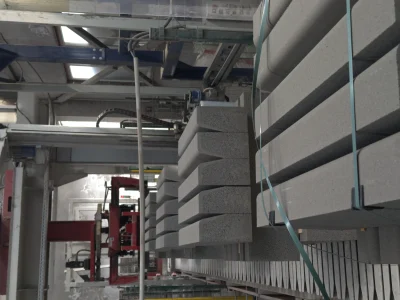
Moreover, local production provides much more flexible conditions in terms of delivery – orders are fulfilled on time and certain types of interventions are possible according to specific project needs. All of this reduces project delay risks and helps us conduct work smoothly.
How to Plan a Budget for a Curb Project?
The correct budgeting process begins with defining the project’s scale and purpose. At this time, it’s important not only the price per curb unit but the complete chain: including delivery, transportation, and installation. When planning the budget, if necessary, attention should also be paid to additional work – for example, integration of drainage systems or sidewalk arrangement, which has an obvious impact on the project’s total value.
It’s advisable to create several options: for minimal, optimal, and maximum budgets; this approach will help you better assess your financial capabilities. Often it’s at this stage that the necessity of other additional costs becomes apparent, which seemingly has nothing to do with the curb price itself, but significantly increases the project in the final sum.
When writing out the budget in detail, consultation with a specialist or manufacturer who should offer you production adapted to a specific project is particularly important.
Legi's Advice: How to Achieve Maximum Results with an Affordable Budget
Achieving quality solutions within a specific budget is always a big challenge, especially when it concerns an infrastructure project. However, experience shows that with proper planning and selecting a competent partner, achieving the best results without excessive costs is entirely possible. Therefore, “Legi” offers you several practical tips on how to get the maximum at the most optimal price for you.
The main starting point is the correctly selected type of curb. Often the project cost increases not because the material is expensive, but because the wrong size or type is chosen. For example, using an overly massive curb in a small yard is both irrational and expensive. To avoid these risks, “Legi’s” team offers each customer individual consultation at the very beginning of the project.
The second tip concerns the planning process – the more detailed you define the project’s scope, transportation routes, and installation deadlines, the less chance there is of excessive costs and wasted time. As we’ve already noted, “Legi’s” curb is locally produced, which provides a significant logistical advantage: product delivery happens quickly, with a flexible schedule and if necessary – in stages. This is especially favorable for those who want consistent and efficient resource allocation without excessive financial pressure.
The third and no less important factor is selecting quality production, which is much more profitable in the long-term perspective. Often an unreliable manufacturer’s unrealistically budget-friendly production actually costs more – it quickly deteriorates, requires frequent repairs or complete replacement, which significantly increases project costs.
“Legi’s” concrete curb is produced with exceptionally high standards, which ensures material durability and long exploitation both in cases of intensive mechanical load and difficult climatic conditions. It’s precisely this that creates real economy when you know that the investment will definitely pay off in the long-term perspective.